
Washington’s highest court
About the Washington State Supreme Court
The Washington State Supreme Court is the court of last resort for our state. It resolves questions of law that affect every Washingtonian and provides statewide guidance to lower courts.
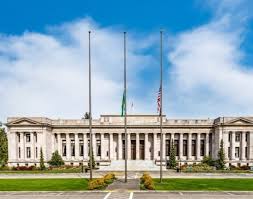
What the Court does—and why it matters
The Court’s work is largely about interpreting the law and ensuring it is applied consistently across Washington. Its decisions can shape how rights are protected, how government powers are exercised, and how disputes are resolved.

Role
Final authority on Washington law
The Supreme Court reviews select cases from lower courts and answers important legal questions. It also hears certain matters directly, including some election and attorney-discipline issues.
How cases reach the Court
Discretionary review of key issues
Most cases come to the Court after a decision by the Court of Appeals. The Supreme Court typically selects cases that present significant legal questions or issues of broad public importance.


How decisions are made
Written opinions and separate views
Justices consider briefs, the record, and oral argument. The Court issues written opinions explaining its reasoning; justices may also write concurring or dissenting opinions.
Frequently asked questions
Important Questions A Voter Should Know
A few basics about how the Washington State Supreme Court functions and why its work is so important to the rule of law.
What does the Washington State Supreme Court do?
It is Washington’s highest court. It reviews legal questions from lower courts, interprets the Washington State Constitution and state laws, and issues decisions that guide courts statewide.
How do cases get to the Supreme Court?
Most cases reach the Court through appeals after a trial-court decision and review in the Court of Appeals. Some matters come directly to the Supreme Court under specific rules (for example, certain constitutional or statewide issues) or through discretionary review when the Court accepts a case.
How are justices selected?
Justices are chosen in statewide elections. When a vacancy occurs between elections, the Governor appoints a justice to serve until the next election as provided by law.
What is the current composition of the Court?
The Court’s roster can change over time. As of today, the Court includes:
- Chief Justice: Debra L. Stephens
- Associate Justices: Charles W. Johnson, Steven C. Gonzalez, Sheryl Gordon McCloud, Raquel Montoya-Lewis, G. Helen Whitener, Salvador A. Mungia, Colleen M. Melody, Theodore J. Angelis
For the most up-to-date roster, please visit courts.wa.gov.
How long is a justice’s term?
Justices serve six-year terms. Elections are staggered so the entire Court is not on the ballot at the same time.
How are decisions made?
The Court reviews written briefs, hears oral argument in many cases, and then issues written opinions. A majority of participating justices determines the outcome; individual justices may write concurring or dissenting opinions.
What does “rule of law” mean in this context?
It means deciding cases based on the Constitution, statutes, and precedent—applying the same legal rules fairly to everyone, without favoritism or political pressure, and explaining decisions through reasoned written opinions.